Why Managing Risk Matters More Than Chasing Returns
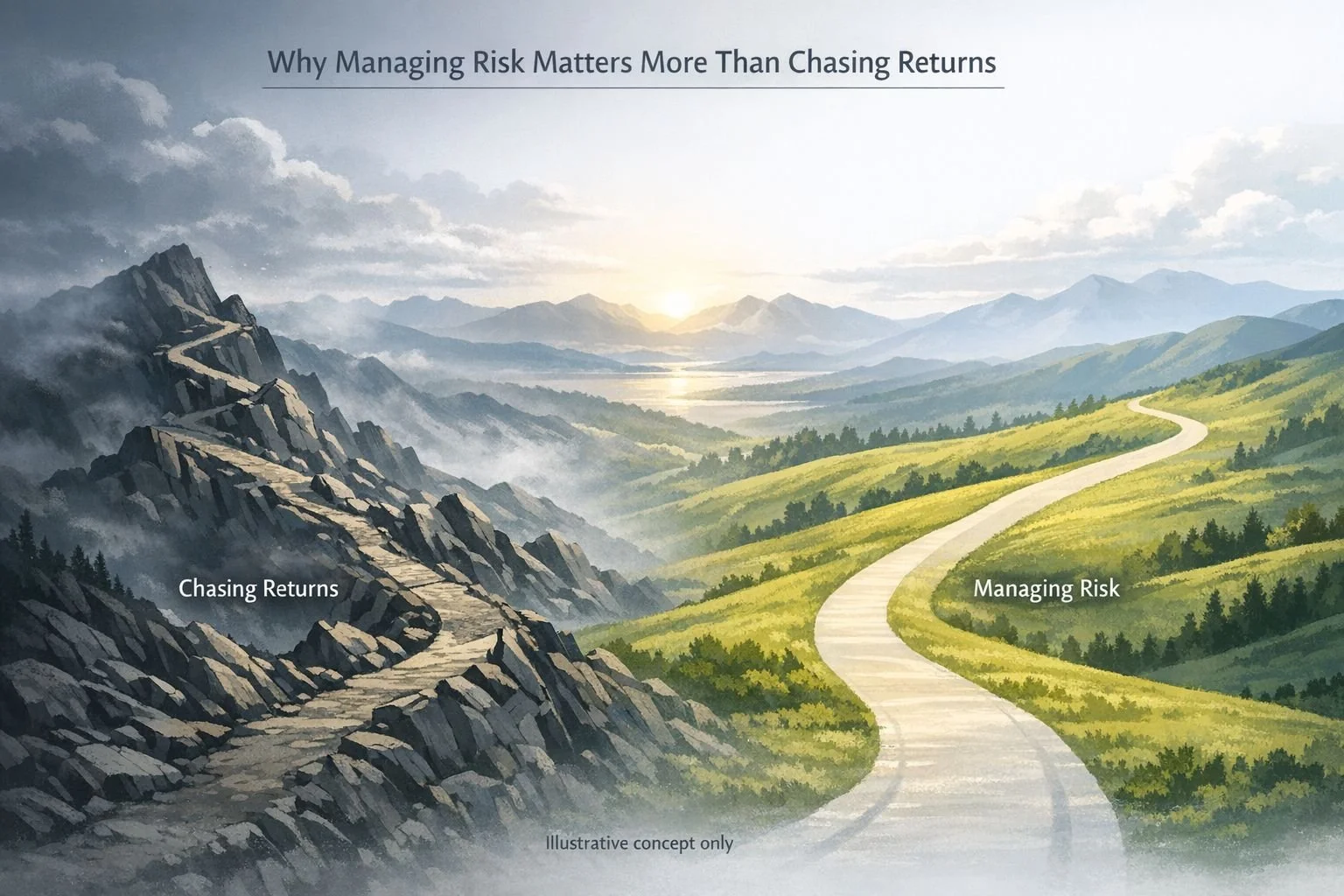
Many investors focus on one thing: returns.
How much did a portfolio make? Could it have made more?
While returns are important, how those returns are achieved matters just as much. That’s why controlling drawdown, risk, and volatility plays a critical role in long-term investing.
Why Drawdowns Matter
A drawdown is the decline from a portfolio’s high point to its lowest point before recovering. Larger drawdowns are harder to recover from:
A 20% loss needs a 25% gain to break even
A 40% loss needs about 67%
A 50% loss needs 100%
The deeper the loss, the harder the recovery. Managing drawdowns is not about avoiding losses entirely—it’s about limiting how severe they become.
Volatility Affects Behavior
Volatility measures how much a portfolio’s value moves up and down. While some movement is normal, excessive swings can make it harder for investors to stay invested.
High volatility can:
Increase stress and uncertainty
Lead to emotional decisions
Cause investors to abandon long-term plans at the wrong time
Smoother return patterns often make it easier to remain disciplined through changing market conditions.
Risk Is Not a Guarantee of Reward
Risk simply means exposure to uncertainty—it does not guarantee higher returns. Taking on too much risk, especially at the wrong time, can lead to significant losses.
Effective risk management focuses on:
Sensible position sizing
Diversification
Being mindful of overall market exposure
The goal is not to eliminate risk, but to manage it thoughtfully.
Stability Supports Long-Term Growth
Compounding works best when capital is preserved. Large losses reduce the amount of capital available to grow, which can affect long-term results.
In some market environments, approaches with lower volatility and smaller drawdowns may lead to more consistent outcomes over time. For this reason, many professional investors look beyond returns alone and consider how those returns are generated.
The Bottom Line
Returns show what happened.
Risk, volatility, and drawdown explain how it happened.
Managing risk is about building portfolios that investors can stay invested in—through both favorable and challenging markets. Over time, consistency and discipline can matter more than chasing the highest possible return.
Important Disclosure:
This article is provided for informational and educational purposes only and does not constitute investment advice or a recommendation. Investing involves risk, including the potential loss of principal. Risk management strategies, including efforts to control drawdowns and volatility, do not ensure profits or protect against loss in all market conditions. Past performance is not indicative of future results.